
You look at your dog and still see the puppy who chewed your favourite shoes, but lately, they’re a little slower to get off the couch. Maybe their muzzle is turning “sugar-coated “ with grey, or they’re opting for a nap over a game of fetch.
We often think of aging as a series of external changes—slower walks and softer beds—but the most critical shift is happening inside. Your senior dog’s nutritional needs are no longer about growth or high-octane energy; they’re about preservation. In this post we’re breaking down the science of “Golden Years” nutrition, debunking common myths about protein, and showing you how the right bowl of food can be the best medicine for a long, happy life together.

When Is a Dog Considered “Senior”?
While many people use 7 as a general rule of thumb, Veterinary Experts from PetMD and the American Kennel Club use the following size-based guidelines:
- Small Breeds (under 20 lbs): Reach senior status around 10-12 years old.
- Medium Breeds (21-50 lbs): Usually considered seniors at 8-10 years old.
- Large Breeds (51-90 lbs): Hit their golden years between 7-9 years old.
- Giant Breeds (over 90lbs): Can be considered senior as early as 5-6 years old.
”Senior vs. “Geriatric
It is also helpful to distinguish between two different elder stages:
- Mature/Senior: The initial transition into old age where metabolism slows down and weight gain is common.
- Geriatric: The later stage where body slows significantly, often marked by a loss of muscle mass and more pronounced cognitive or physical decline.
The Protein Myth vs. Modern Science: Why “Less” Isn’t “More”
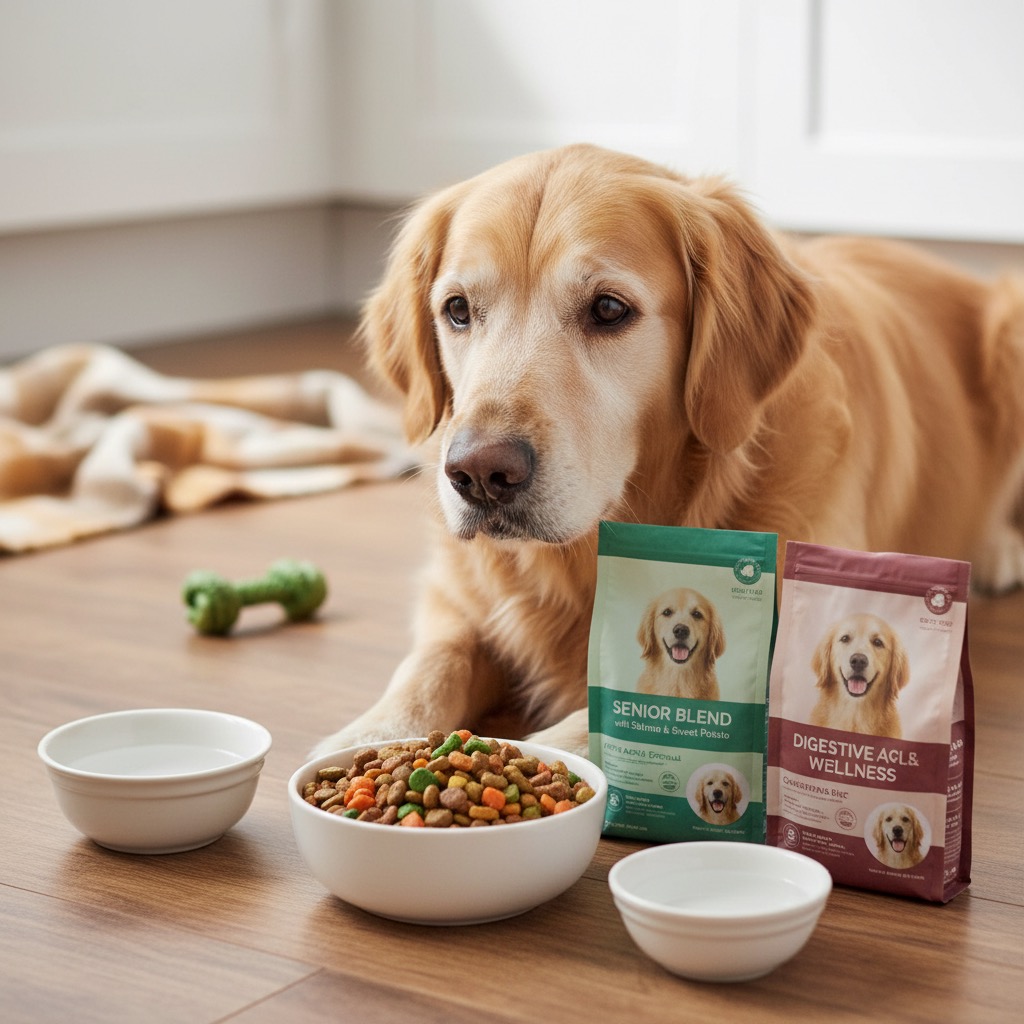
For decades, the prevailing wisdom was that senior dogs should eat a low-protein diet to “protect their kidneys.” The theory was that protein byproducts were hard on aging organs, so cutting back would extend a dog’s life.
Modern veterinary science has officially debunked this.
Unless your dog has been formally diagnosed with advanced Chronic Kidney Disease (CKD) by a veterinarian, restricting protein can actually do more harm than good. Here is why your senior dog needs a protein-rich bowl:
- Fighting Sarcopenia (Muscle Wasting): Just like humans, aging dogs suffer from sarcopenia—the natural, progressive loss of lean muscle mass. Muscle is the “armor” that protects your dog’s joints; once it’s gone, mobility drops and the risk of injury skyrockets. To maintain that muscle, a senior dog actually requires up to 50% more high-quality protein per pound of body weight than a younger adult dog.
- Supporting a Weary Immune System: Proteins are the building blocks of antibodies. As a dog’s immune system naturally weakens with age, they rely on a dietary protein to produce the cells that fight off infections and heal wounds. A low-protein diet can leave a senior dog vulnerable to illness.
- Efficiency vs. Intake: As dogs age, their bodies become less efficient at processing nutrients. They don’t absorb protein as easily as they did at age two. By feeding a highly digestible, high-quality animal protein (like deboned chicken, turkey, or eggs), you ensure their body gets what it needs even if their digestive “engine” is slowing down.
The Golden Rule for Protein: Focus on quality, not just quantity. Look for named animal proteins as the first ingredient (e.g., “deboned salmon”) rather than vague “meat meals” or heavy plant-based fillers like corn and soy, which are harder for an old digestive system to break down.
Choosing the right food for a senior dog can make a big difference in their health and comfort. Use this simple checklist to help you choose the best food for your senior dog.
🐾Senior Dog Food Checklist: 5 Things to Look For
Before you toss that bag into your cart, flip it over and check the Guaranteed Analysis and Ingredients List. Here’s what a high-quality senior formula should look like:
- Named Animal Protein as the First Ingredient: Look for specific meats like “Deboned Chicken,” “Salmon,” or “Lamb.” Avoid vague terms like “Meat By-Products “ or “Animal Meal,” which are often lower quality and harder to digest.
- Glucosamine & Chondroitin: These are the “building blocks” of joint health. Ideally, look for a food that explicitly lists these levels on the back—this helps reduce the need for separate (and expensive) pills.
- Omega-3 Fatty Acids (EPA & DHA): Often listed as Fish Oil, Salmon Oil, or Flaxseed. These are essential for fighting inflammation in stiff joints and keeping your senior’s brain sharp.
- Controlled Calories with High Fiber: Senior dogs move less, so they need fewer ”empty” calories but more fiber (like beet pulp or miscanthus grass) to keep their digestion moving and help them feel full.
- L—Carnitine: This is a “bonus” ingredient often found in premium senior foods. It helps the body metabolize fat into energy, which is crucial for preventing “senior spread” (weight gain).

Senior Pet Tip 🐾
An essential nutrition tip for your senior dog is to prioritize hydration through “wetting“ their food. Add flavourful pet-safe bone broth (free of onions & garlic) or warm water into dry kibble. This not only hydrates them, but also releases enticing aromas for dogs whose sense of smell has diminished.
Every Meal is an Investment
Feeding a senior dog isn’t just about filling a bowl; it’s about fueling their quality of life. Whether it’s adding a splash of bone broth for hydration or switching to a high-protein recipe to protect those hard-working muscles, these small adjustments pay off in more tail wags and comfortable mornings.
Remember, your dog’s nutritional needs can change quickly in their later years. Use this guide as a starting point, but always keep your veterinarian in the loop—especially if you notice sudden changes in weight or appetite. They’ve spent a lifetime looking out for you; now it’s your turn to nourish them through their best years yet.
Leave a Reply